
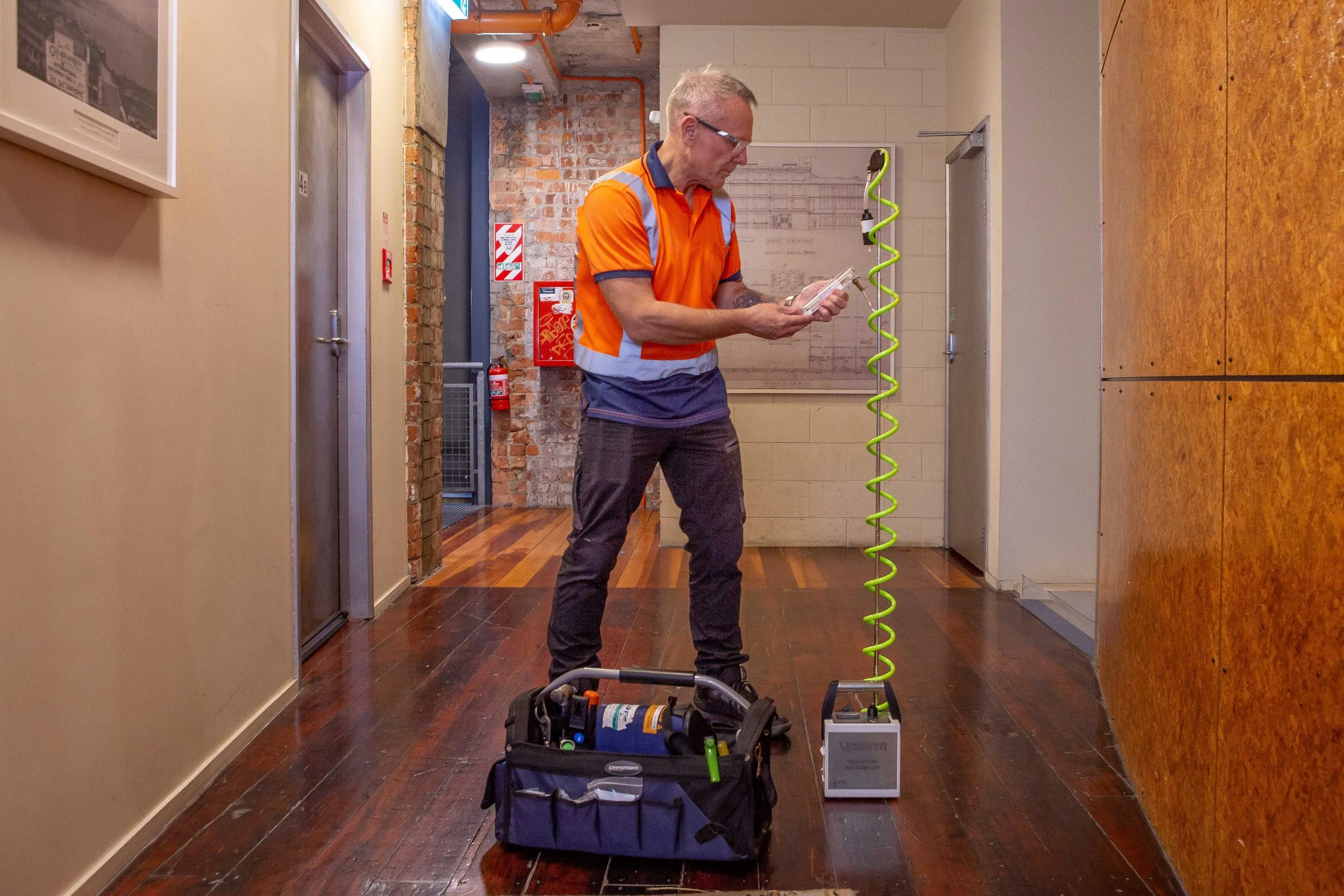
Indoor Air Quality Testing Wellington & Nationwide
Professional indoor air quality testing for homes, workplaces and commercial buildings. Identify airborne contaminants, investigate unexplained health symptoms and odours, and protect occupants from potentially harmful exposure.
Key reasons to call Paul
Professional indoor air quality assessments
Air sampling and laboratory analysis
Testing for mould spores, bacteria and airborne dust
Assessment of VOCs, formaldehyde and chemical contaminants
Investigation of unexplained odours and occupant health concerns
Clear reports and practical recommendations
Our Indoor Air Quality Testing Process
Initial Discussion – We establish your concerns, occupant symptoms and appropriate testing requirements.
Site Inspection – We assess the building, ventilation and potential sources of contamination.
Air Sampling – We collect air samples to investigate suspected airborne contaminants.
Laboratory Analysis – Samples are analysed to identify and measure relevant contaminants.
Assessment and Recommendations – We provide clear findings and practical advice on reducing exposure and improving indoor air quality.
What You'll Receive
Laboratory results identifying and measuring airborne contaminants in submitted samples.
Assessment findings documenting indoor air quality concerns and potential contamination sources.
Exposure assessment outlining potential risks to building occupants.
Practical recommendations identifying appropriate corrective actions to improve indoor air quality.
Ongoing support through further investigations and post-remediation testing, where required.
Frequently Asked Questions
What are the common causes of poor indoor air quality?
Indoor air can contain biological and chemical contaminants, including mould spores, bacteria, airborne dust, volatile organic compounds (VOCs) and formaldehyde. These may originate from building materials, furnishings, cleaning products, moisture problems and inadequate ventilation.
Can poor indoor air quality make you sick?
Yes. Exposure to airborne contaminants can cause respiratory irritation, allergic reactions, headaches and irritation of the eyes, nose and throat. Some contaminants can also aggravate asthma and existing respiratory conditions. The health effects depend on the type and level of exposure and individual susceptibility.
When should indoor air quality testing be carried out?
Testing is recommended when occupants experience unexplained health symptoms, persistent respiratory irritation or unusual odours within a building. It is also useful following water damage, suspected mould contamination or concerns about chemical exposure.
What contaminants can you test for?
Depending on the circumstances, we can investigate airborne fungal spores, bacteria, inhalable and respirable dust, volatile organic compounds (VOCs), formaldehyde and other potential airborne contaminants. Testing is tailored to the suspected sources and concerns identified during the initial assessment.
What are volatile organic compounds (VOCs)?
VOCs are chemicals released as gases from certain building materials, paints, adhesives, carpets, furnishings, solvents and cleaning products. Some can cause headaches, nausea and respiratory irritation, particularly where indoor concentrations are elevated.
Can you investigate unexplained odours?
Yes. Persistent or unusual odours may indicate microbial contamination, chemical emissions or other indoor environmental problems. We can investigate potential sources and recommend appropriate testing.
What is the difference between indoor air quality testing and mould testing?
Mould testing focuses specifically on fungal contamination, including airborne mould spores. Indoor air quality testing considers a broader range of biological and chemical contaminants, including bacteria, dust, VOCs and formaldehyde.
What happens if airborne contamination is identified?
We document our findings and provide recommendations to reduce exposure and address the contamination. Depending on the results, this may involve improving ventilation, addressing moisture problems, removing contaminated materials or undertaking further investigation and remediation.